

Table of Contents
- The Evolution of Coastal Style: From Nautical Cliché to Refined Luxury
- Warm Neutral Colour Palettes for Homes: The Heart of 2026 Coastal Design
- Natural Textures and Sustainable Materials
- Coastal Wall Art Styling Tips for Every Space
- Modern Coastal Furniture and Architectural Details
- Coastal Decor for Small Spaces and Renters
- Creating Calm: The Psychological Benefits of Coastal Design
- Conclusion
- Frequently Asked Questions
Last Updated: August 31, 2026
The Evolution of Coastal Style: From Nautical Cliché to Refined Luxury
Coastal decor has undergone a dramatic transformation. What once meant predictable navy-and-white striping, rope details, and shell-covered accent pieces has evolved into something far more sophisticated. Today, what defines coastal decor in 2026 is a deliberate shift toward warmth, texture, and quiet luxury, a move away from the literal, kitschy interpretations that dominated previous decades.
Blair Moore, an interior designer at Moore House Design, puts it plainly: "Coastal design definitely gets a reputation for feeling dated or overly theme-driven because people often associate it with the same expected elements, like the coastal blues, rope details, shells, wicker, anchors, and overly literal nautical references." This observation captures the core tension that's driving today's coastal aesthetic. The market is rejecting formula-based coastal design in favour of something genuinely timeless.
The numbers support this shift. The UK home decor market is projected to reach £1.82 billion in 2026, up from £1.74 billion in 2025, according to Statista's UK Home Décor Market Report, with online sales expected to account for approximately 35% of total revenue. More tellingly, over 60% of UK consumers now prioritize product longevity over initial price, according to Mintel's UK Home Retailing Market Report. This shift in consumer values directly influences how coastal design is being approached, people want pieces that last, spaces that feel authentic rather than decorated, and interiors that reflect genuine personality rather than a predetermined aesthetic.
At paints2prints, we've observed this transformation firsthand through the coastal canvas prints our customers select. The trend is unmistakable: buyers are gravitating toward serene seascapes and landscape artwork that capture the authentic mood of the coast, rather than literal beach-themed novelties. The 2026 coastal aesthetic is about creating a home sanctuary that whispers rather than shouts its coastal inspiration.
Warm Neutral Colour Palettes for Homes: The Heart of 2026 Coastal Design
The colour palette is where the 2026 coastal shift becomes most visible. The stark white-and-navy combination that defined coastal interiors for years is being replaced by what designers call "tonal warmth", creamy ivory, soft mushroom, oatmeal taupe, and sun-washed hues that absorb light rather than reflect it harshly.
This palette creates an expansive, luxurious feel that cool whites simply cannot achieve. Warm neutrals act as a foundation that makes spaces feel intentional rather than empty. They allow texture, natural light, and carefully selected accent pieces to do the visual work. The psychological effect is significant: warm tones create a sense of comfort and refuge, which is precisely what modern coastal design aims to deliver.
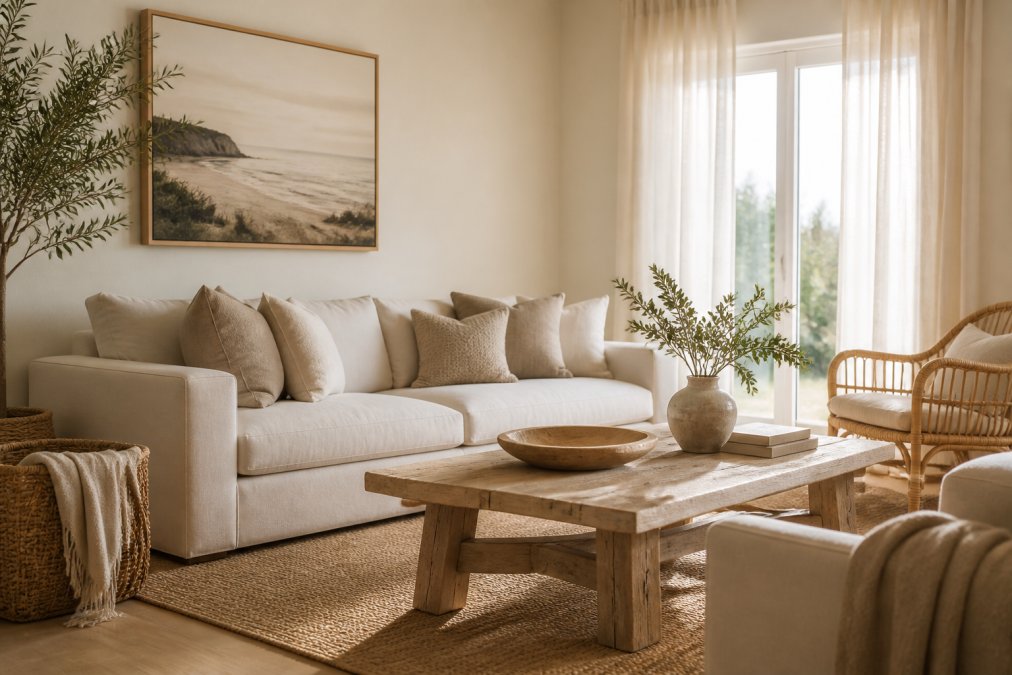
Beyond the primary neutrals, the 2026 coastal palette incorporates earthy undertones and muted accents. Deep sea greens, slate greys, and subtle splashes of mustard yellow provide visual interest without disrupting the calm atmosphere. These colours echo the authentic coastal environment, the weathered driftwood, the moody pre-storm skies, the soft vegetation along the shoreline, rather than relying on generic "beach colours."
The practical benefit is significant: a warm neutral base means your wall art, furniture, and accessories work harder visually. A single quality coastal canvas print becomes an anchor point rather than one element competing for attention in a busy colour scheme. Products like the Cornish Coast: Ocean Art Canvas Print work beautifully against warm walls because the artwork's natural tones complement rather than contrast with the space.

Natural Textures and Sustainable Materials
Texture is doing the heavy lifting in 2026 coastal interiors. With colour palettes intentionally restrained, layered textures create depth, interest, and that essential sense of tactile comfort. This is where coastal design becomes genuinely luxurious rather than merely themed.
The materials driving this trend are natural, honest, and built to last. Woven linen, rough-glazed ceramics, grasscloth wallpaper, and natural unfinished wood are the building blocks of refined coastal spaces. Sisal rugs, jute accents, and woven cane furniture bring organic texture underfoot and into seating areas. Limewash walls and microcement surfaces add subtle visual complexity without introducing pattern or colour chaos.
This emphasis on natural materials aligns directly with consumer priorities. Over 60% of UK consumers now prioritize product longevity over initial price, which means they're actively choosing quality pieces designed to age gracefully rather than trend quickly. Sustainable coastal decor isn't a niche preference, it's becoming the baseline expectation.
The textural approach also creates what designers call "biophilic design", spaces that subtly connect inhabitants to nature through materials and finishes. A room with layered textures feels alive, even when the colour palette is deliberately muted. This is the psychological benefit that makes modern coastal design feel restorative rather than decorative.
Coastal Wall Art Styling Tips for Every Space
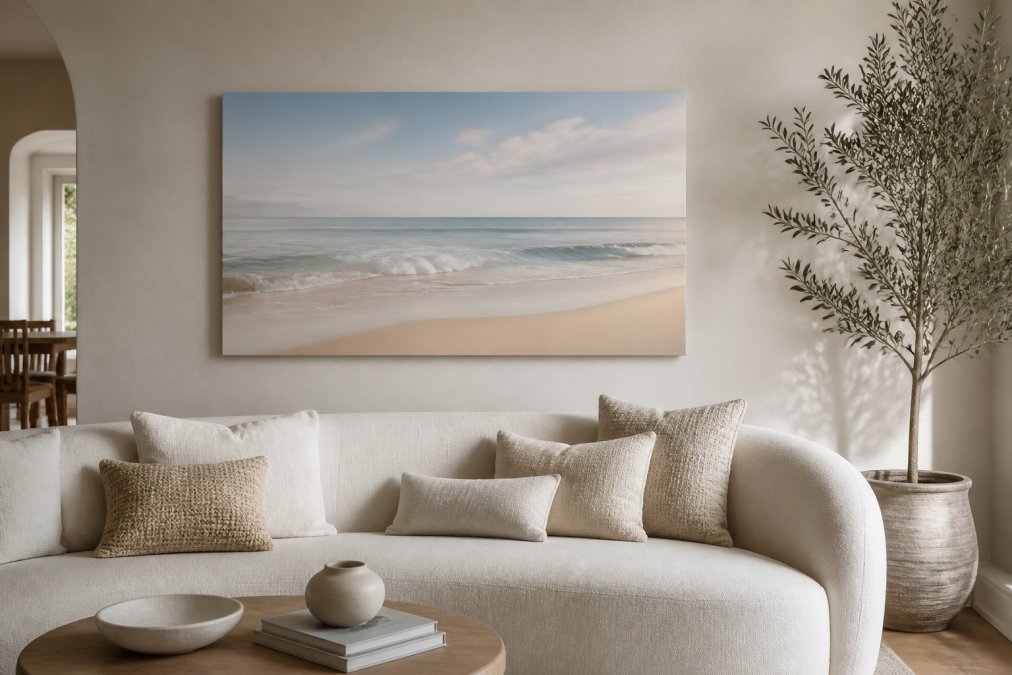
Wall art anchors a coastal interior. It's the focal point that justifies the restraint in colour and pattern elsewhere in the room. In 2026, the approach to coastal wall art has shifted dramatically, away from literal beach scenes and toward atmospheric landscapes that evoke the feeling of coastal living without stating it explicitly.
The best coastal canvas prints capture light, mood, and authentic coastal environments. A seascape that shows the drama of an incoming storm or the subtle colour variations in sand and water at different times of day creates visual interest that generic beach imagery cannot match. This is why pieces like the Polzeath Beach: Cornish Beach Canvas Art Print resonate, they document a specific place and moment rather than illustrating a generic concept.

When styling wall art in a coastal space, consider these practical guidelines:
- Scale matters: The artwork should be proportional to the wall and furniture below it. A small print on a large wall creates visual imbalance; oversized art in a compact space feels oppressive. Most living rooms benefit from a print that occupies 50-75% of the wall space above a sofa or console.
- Placement logic: Hang art at eye level (typically 57 inches from floor to centre of artwork). This feels natural and ensures the piece functions as a focal point rather than decoration you have to crane your neck to see.
- Framing decisions: Unframed canvas prints create a modern, gallery-like feel and work beautifully in minimalist spaces. Framed options add formality and protect the artwork in high-traffic areas. paints2prints offers both options, allowing you to choose based on your room's aesthetic and your lifestyle needs.
- Complementary accessories: Resist the urge to surround your coastal art with additional beach-themed items. Instead, let the artwork breathe. A single quality print paired with carefully chosen textiles and natural materials creates far more impact than a clustered gallery wall of coastal imagery.
Modern Coastal Furniture and Architectural Details
Furniture in 2026 coastal interiors prioritizes form and comfort over explicit coastal references. The shift away from wicker, rattan, and nautical-inspired pieces is complete. Instead, designers are selecting curved and sculptural forms that echo natural contours, rounded sofas, arched accent chairs, organic-shaped mirrors, without referencing the beach directly.
Curved furniture creates a relaxed visual rhythm that straight lines cannot achieve. It softens a room, makes spaces feel more inviting, and aligns with the biophilic design principles that underpin modern coastal aesthetics. A curved sectional in warm linen feels coastal not because it's made from wicker, but because its form suggests the natural ease of coastal living.
Architectural details matter equally. Fluted cabinetry, arched doorways, and textured wall treatments create visual interest and depth. These elements work in concert with the restrained colour palette to build a sophisticated interior that feels intentional rather than decorated. The goal is spaces that support everyday living while subtly evoking the calm, unhurried pace of coastal environments.
Wood tones have shifted noticeably. Bleached and whitewashed finishes are being replaced by warmer tones, walnut, warm oak, and darker stained woods. These bring weight and warmth to spaces that lighter finishes made feel sparse. This shift reflects a broader move toward "quiet luxury," where quality materials and craftsmanship communicate value more effectively than high contrast or visual busyness.
Coastal Decor for Small Spaces and Renters
The assumption that coastal design requires a sprawling seaside home is entirely outdated. Modern coastal aesthetics work beautifully in compact urban flats, studio apartments, and rental properties. The key is focusing on the elements that actually define the style, warmth, natural materials, calm atmosphere, rather than square footage or permanent fixtures.
For small spaces, the principle is restraint. A single quality coastal canvas print becomes the anchor for an entire room's aesthetic. The East Coast Calm: Beach Landscape Canvas Print works exceptionally well in compact bedrooms or studio living areas because it creates a focal point without overwhelming the space. The artwork does the heavy lifting visually, allowing the rest of the room to remain minimal and uncluttered.

Renters face unique constraints, but modern coastal design is actually renter-friendly. Canvas prints require only a single nail or picture hook, making them non-permanent solutions. Textiles, linen cushions, natural fibre throws, woven rugs, add texture and warmth without requiring any installation. Unframed canvas options from paints2prints are particularly practical for renters because they create visual impact while remaining entirely portable.
Storage and vertical space become critical in small coastal interiors. Open shelving displaying a curated collection of natural objects, smooth stones, driftwood, simple ceramics, adds texture and personality without consuming floor space. The key is intentionality: every item should either serve a function or contribute meaningfully to the aesthetic.
Creating Calm: The Psychological Benefits of Coastal Design
There's genuine neuroscience behind why coastal design feels restorative. Environments that evoke natural settings activate the parasympathetic nervous system, the body's relaxation response (peer-reviewed research). Warm, textured spaces with muted colour palettes and subtle natural imagery create measurable reductions in stress and anxiety. This isn't aesthetic preference; it's physiological response.
Emily Carson, an interior designer, observes: "People are decorating less for guests and more for emotional comfort." This shift reflects a broader understanding that our homes should actively support our wellbeing, not just look impressive. A coastal interior designed with authentic materials, warm tones, and calming artwork becomes a genuine refuge rather than a showpiece.
The psychological benefits extend beyond stress reduction. Spaces that feel connected to nature, through materials, colour, and imagery, improve focus and creativity. They create a sense of continuity with the natural world, which is particularly valuable in urban environments where that connection is often severed. A room with coastal wall art, natural textures, and warm neutrals doesn't just look calm; it actually facilitates calm.
This is why the 2026 shift toward refined, understated coastal design is so significant. The previous era's explicit, heavily themed coastal interiors could feel kitschy or artificial, visually busy rather than genuinely restorative. Modern coastal design, by contrast, uses restraint and authenticity to create spaces that genuinely support emotional wellbeing.
Conclusion
What defines coastal decor in 2026 is fundamentally different from the coastal aesthetic of even five years ago. The shift is away from literal beach references and toward refined, textured, warmly neutral spaces that evoke the feeling of coastal living without stating it explicitly. Warm neutrals, natural materials, curved furniture, and carefully curated wall art create interiors that feel both sophisticated and genuinely restorative.
The challenge with coastal design is avoiding the formula, the predictable elements that make spaces feel themed rather than lived-in. paints2prints solves this by offering curated coastal and landscape canvas prints that capture authentic coastal environments rather than generic beach imagery. With customizable sizes, framing options, and free shipping to the UK and EU, you can create a genuinely refined coastal interior that reflects your personal aesthetic. Start with a quality piece like the Breaking Wave Ocean Wave Canvas Print as your focal point, then build the rest of your space around it using warm neutrals, natural textures, and intentional design choices.
| Element | 2026 Coastal Approach | Previous Era Approach |
|---|---|---|
| Colour Palette | Warm neutrals, earthy tones, muted accents | Stark white, navy, high contrast |
| Materials | Natural, sustainable, textured | Wicker, rope, literal nautical items |
| Furniture | Curved, sculptural forms | Rattan, wicker, beach-themed pieces |
| Wall Art | Atmospheric landscapes, authentic seascapes | Generic beach scenes, literal nautical imagery |
| Philosophy | Quiet luxury, restraint, authenticity | Explicit theming, visual busyness |
Frequently Asked Questions
How does 2026 coastal decor differ from traditional beachy styles?
Modern coastal decor in 2026 moves away from overtly nautical themes like anchors, ropes, and shells toward a refined, timeless aesthetic. The focus is on warm neutrals, natural textures, and organic materials rather than stark white minimalism. Interior designer Blair Moore notes that today's coastal design blends a desire for escape with contemporary trends, creating elevated, design-forward spaces that feel lived-in rather than themed. This shift reflects a broader preference for emotional comfort and longevity over novelty.
What warm neutral colours define coastal decor in 2026?
The 2026 coastal palette has shifted from high-contrast white to 'tonal warmth' with creamy ivory, soft mushroom, and oatmeal taupe. These glow tones absorb and soften light, creating an expansive, luxurious feel. Modern coastal homes also embrace earthy tones including warm browns, soft greens, deep sea greens, slate greys, and subtle splashes of mustard yellow. This broader, nature-inspired colour palette reflects the actual moody spectrum of coastal environments rather than a limited, formulaic scheme.
What role do natural textures play in coastal wall art styling tips?
Textural layering is essential to modern coastal interiors. Woven linen, rough-glazed ceramics, grasscloth wallpaper, and natural wood create visual interest and dimension in restrained colour palettes. When styling coastal wall art, pair canvas prints with these tactile finishes, rattan frames, sisal rugs, and jute accents complement landscape and seascape prints. The combination of smooth canvas with textured furnishings and accessories creates the serene, organic feel that defines 2026 coastal design.
Is coastal decor still in style for 2026?
Yes. The global nautical coastal decor market reached £3.50 billion in 2025 and is expected to grow to £5.26 billion by 2032, at a 6.0% annual growth rate. Beyond market size, the trend has evolved significantly. Rather than declining, coastal style has matured into a more sophisticated, sustainable aesthetic that homeowners integrate into primary residences for everyday living, not just holiday homes. The shift toward longevity, natural materials, and timeless design ensures coastal decor remains relevant and desirable.
Can I use coastal decor in a small flat or rental property?
Absolutely. Coastal decor works well in compact spaces because it emphasises calm, restraint, and intentional design rather than clutter. For renters, canvas wall art is ideal, it hangs securely without permanent damage and moves with you. Choose lightweight, unframed prints or opt for removable hanging solutions. Warm neutrals and minimal accessories make small spaces feel larger and more serene. Focus on one or two statement pieces, like a coastal landscape canvas, paired with simple furnishings and natural textures to create an impactful, renter-friendly coastal interior.
What sustainable materials should I prioritise in coastal decor?
Over 60% of UK consumers now prioritise product longevity over initial price, making sustainable materials central to 2026 coastal design. Choose unfinished wood, FSC-certified timber, linen, cotton, jute, and sisal. Canvas prints using water-based inks and UV protection ensure durability and reduced environmental impact. Look for furniture crafted from renewable sources and textiles with natural fibres. This focus on quality, enduring pieces reflects the 'quiet luxury' philosophy, understated elegance built to last, which defines both modern coastal style and conscious home decoration.
How do curved furniture and organic shapes fit into coastal decor?
Curved and sculptural forms are defining 2026 coastal interiors. Rounded sofas, curved accent chairs, arched openings, and organic mirrors create a relaxed feel that echoes natural contours of dunes, water, and landscape. These shapes soften the space and promote the calm atmosphere central to coastal design. Paired with warm neutrals and natural textures, curved furniture prevents the rigid minimalism of older coastal styles. This approach makes spaces feel inviting and human-scaled rather than austere, supporting the trend toward coastal design as a primary residence aesthetic.
This article was written using GrandRanker
0 comments