

Table of Contents
- Framed vs Unframed Canvas Prints: Key Differences at a Glance
- What Is an Unframed Canvas Print?
- What Is a Framed Canvas Print?
- Gallery Wrap vs Framed Canvas: Understanding the Difference
- Pros and Cons of Unframed Canvas Prints
- Pros and Cons of Framed Canvas Prints
- How to Hang Canvas Art Without a Frame
- Benefits of Floating Frames for Canvas Prints
Last Updated: August 13, 2026
Framed vs Unframed Canvas Prints: Key Differences at a Glance
Unframed canvas prints arrive stretched over wooden stretcher bars with clean, borderless edges in a gallery wrap style that creates a minimalist, contemporary look. Framed canvas prints come mounted inside a wooden frame that adds depth, dimension, and a more traditional finishing touch. The choice between framed vs unframed canvas affects installation difficulty, wall protection, durability, and long-term value.
At paints2prints, we offer both options to suit different spaces and preferences. The core tension is simplicity versus sophistication: unframed prints are straightforward to hang and work brilliantly in modern interiors, while framed prints deliver a polished, gallery-quality presence that transforms a room. Neither is objectively "better", context matters.
What Is an Unframed Canvas Print?
An unframed canvas print is stretched tautly over wooden stretcher bars, typically 3-4 cm deep, with no frame surrounding it. The canvas edges wrap around the sides, creating a gallery wrap with a clean, minimalist aesthetic. The stretcher bars are constructed from solid wood and provide structural rigidity, while the canvas material, typically a poly-cotton blend, is treated with water-based inks and UV protection to resist fading and warping.
What makes unframed canvas distinct is pure image without visual interruption. There's no frame profile, no additional border. The image appears to float directly on your wall, creating an open, airy feeling that works exceptionally well for landscape photography, coastal scenes, and nature imagery.
What Is a Framed Canvas Print?
A framed canvas print combines a stretched canvas with a wooden frame that surrounds it, creating dimensional depth and a finished, gallery-quality presentation. The frame typically measures 1 cm wide from the front and extends 4 cm deep from the wall, creating a shadow-box effect.
Floating frames, the most popular framing style for canvas, use an internal frame structure that sits behind the canvas, creating visible spacing between the canvas surface and the frame edge. This gap produces a three-dimensional effect, making the artwork appear to hover away from the wall. The frame profile itself becomes part of the design, with poplar hardwood frames in natural, light, or dark finishes complementing different interior styles.
Framed canvas prints deliver a sense of completion and permanence. They work particularly well in formal spaces, above mantels, in hallways, or as statement pieces in living rooms.
Gallery Wrap vs Framed Canvas: Understanding the Difference
A gallery wrap is an unframed canvas where the image wraps around the sides of the stretcher frame, emphasising minimalism and contemporary aesthetics. The stretcher bars remain hidden behind the canvas, creating a seamless, borderless look that works brilliantly for bold graphics and abstract art.
Framed canvas uses the stretcher bars as an internal structure but adds a visible wooden frame around the perimeter. This frame becomes a design element itself, containing the artwork and creating a clear boundary between the image and the wall. Framed canvas is better suited to traditional interiors and formal spaces where you want the artwork to feel like a deliberate, finished piece.
Practically, gallery wrap maximises wall space and works in tight spaces, while framed canvas requires additional wall space for the frame profile but delivers a more polished appearance. For renters concerned about wall damage, unframed gallery wrap is often preferable because it requires minimal wall fastening.
Pros and Cons of Unframed Canvas Prints
Pros of Unframed Canvas:
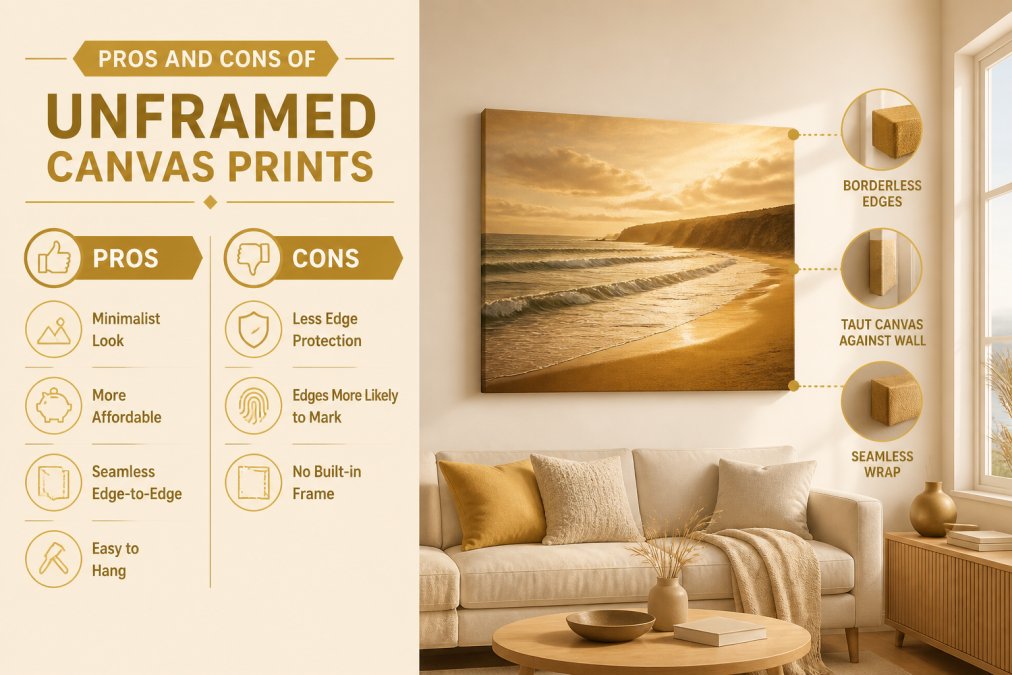
Unframed canvas prints are straightforward to install, locate wall studs, mark hanging points, and secure the pre-installed sawtooth hardware in under 10 minutes. For renters, this simplicity is invaluable: minimal wall damage, easy removal, and no landlord concerns.
The aesthetic is contemporary and gallery-like. Borderless edges create visual continuity between the image and your wall, making the artwork feel part of the space. This works exceptionally well in modern interiors, minimalist spaces, and rooms with limited wall area. Unframed canvas is also more affordable than framed equivalents, at paints2prints, unframed coastal and landscape prints start at £69.00, and feels lighter visually and physically, creating a more airy, open feeling.

Cons of Unframed Canvas:
The primary limitation is durability at the edges. Because the canvas wraps around the stretcher bars with no protective frame, the side edges are more vulnerable to dust, accidental contact, and wear over time.
Unframed prints also offer less visual impact in formal or traditional spaces. Without a frame to anchor the artwork, unframed canvas can feel less intentional or finished in rooms with traditional décor. Wall protection is another consideration: unframed canvas sits closer to the wall, and over years, this can occasionally lead to minor wall discolouration in humid environments, though this is rare with proper wall preparation.
Pros and Cons of Framed Canvas Prints
Pros of Framed Canvas:
Framed canvas prints deliver visual sophistication and perceived value. The frame adds intentionality and polish, making the artwork feel like a gallery piece. In formal living rooms, hallways, or above mantels, framed canvas commands attention and elevates the entire space's aesthetic.
Protection is substantial. The frame surrounds and protects the canvas edges, shielding them from dust and environmental wear. The internal frame structure also keeps the canvas permanently taut, preventing sagging or warping. Framed canvas works across multiple interior styles, light wood frames enhance Scandinavian or coastal spaces; darker frames complement contemporary or or traditional décor. Framed prints also feel more permanent and valuable, making them ideal for homeowners investing in long-term artwork.
Cons of Framed Canvas:
Cost is the most obvious drawback. Framed canvas prints are significantly more expensive than unframed equivalents.
Installation requires more consideration. Framed canvas is heavier, demanding proper wall anchors and stud location, and typically takes 15-30 minutes. For renters, the larger footprint and increased weight mean more visible wall damage upon removal, and landlords may object to permanent-looking installations.
Framed canvas can also feel visually heavy in minimalist or contemporary spaces. The frame adds visual weight, which works beautifully in traditional rooms but can feel at odds with clean, uncluttered modern interiors.
How to Hang Canvas Art Without a Frame
Hanging unframed canvas art is straightforward. Use a stud finder to locate wall studs, typically spaced 16 inches (approximately 40 cm) apart. Measure your canvas width and determine positioning, most people hang artwork at eye level, with the centre roughly 150-160 cm from the floor. Mark hanging points lightly in pencil, ensuring they align with studs or are spaced to distribute weight evenly.
Pre-installed sawtooth hardware simplifies installation. Align the hardware with your marked points and drive appropriate fasteners into the wall. The rubber bumpers included with quality prints protect your wall from direct contact with the stretcher frame.
For lighter unframed prints under 3 kg, adhesive strips designed for canvas art can work on drywall. However, for anything heavier or permanent installation, stud anchoring is essential. Never rely on picture hooks alone for canvas art.
Benefits of Floating Frames for Canvas Prints
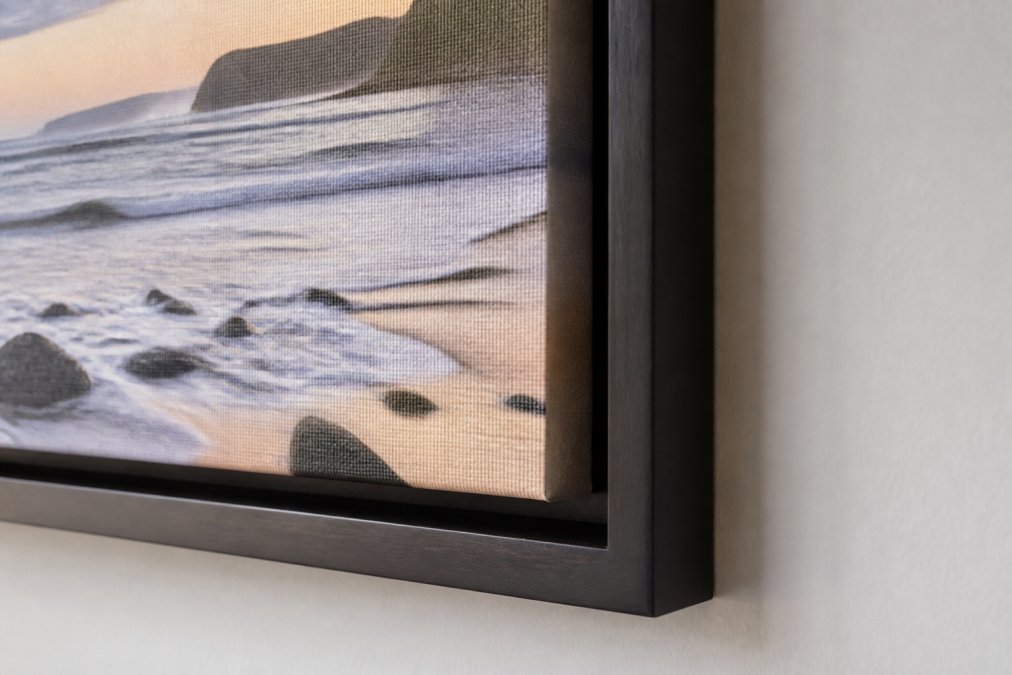
Floating frames create visible spacing between the canvas and the frame edge, typically 0.5-1 cm of air gap. This spacing produces a dimensional, three-dimensional effect that makes the artwork appear to hover away from the wall.
This visual depth is the primary benefit. The shadow created by the gap adds visual interest and sophistication, making the artwork feel more substantial and gallery-quality. Floating frames also protect canvas edges more effectively than unframed presentations. The internal structure keeps the canvas permanently taut, preventing sagging or warping, and shields edges from dust and accidental contact.
Structurally, floating frames are engineered for stability. The internal frame bears the canvas weight, distributing it evenly across the perimeter. For artwork larger than 80 cm in any dimension, floating frames are often the recommended choice because they provide superior structural support.
Aesthetically, floating frames work across contemporary and traditional interiors, with the frame finish becoming a design element that coordinates with your room's colour palette. The trade-off is cost and installation complexity, but for homeowners seeking a gallery-quality, long-term investment, floating frames deliver aesthetic and practical value that justifies the additional expense.
Comparison Table: Unframed vs Framed Canvas Prints
| Aspect | Unframed Canvas | Framed Canvas | Floating Frame |
|---|---|---|---|
| Starting Price | £69.00 | ||
| Installation Time | 5-10 minutes | 15-30 minutes | 20-40 minutes |
| Wall Damage (Renter-Friendly) | Minimal | Moderate | Moderate-High |
| Weight | 2-4 kg | 4-8 kg | 5-10 kg |
| Aesthetic | Contemporary, minimalist | Traditional, polished | Gallery-quality, dimensional |
| Durability (Edge Protection) | Moderate | High | Very High |
| Visual Impact | Clean, borderless | Defined, finished | Dimensional, striking |
| Best For | Modern spaces, renters | Formal rooms, homeowners | Statement pieces, long-term investment |
| Adjustment After Hanging | Easy | Moderate | Difficult |
Making Your Choice: Which Suits Your Home?
The decision between framed vs unframed canvas prints depends on three factors: your interior style, your living situation, and your budget.
Choose unframed canvas if: You're renting, you prefer contemporary or minimalist aesthetics, you're decorating multiple rooms on a budget, or you want straightforward installation. Unframed works brilliantly in modern flats, coastal-themed spaces, and rooms where you want a clean, gallery-like appearance. At paints2prints, our unframed coastal prints like "Overstrand Beach: Before the Storm" (£69.00) deliver professional quality at accessible prices.

Choose framed canvas if: You own your home, you prefer traditional or formal interiors, you want a gallery-quality, finished appearance, or you're investing in a statement piece for a key room. Framed canvas works beautifully above mantels, in hallways, or as focal points in living rooms.
Choose floating frames if: You want maximum visual impact, you're hanging a large print (over 80 cm), or you're seeking a long-term investment in premium wall art. Floating frames deliver dimensional depth and architectural presence that transforms a room.
Consider also the specific image. Landscape photography and coastal scenes often read beautifully unframed because the borderless presentation emphasises the natural vista. Wall space and weight capacity matter too: unframed canvas requires less wall real estate and lighter fastening, while framed canvas demands studs or heavy-duty anchors.
Choosing between framed and unframed canvas prints ultimately reflects your space, style, and permanence. Renters seeking flexibility should choose unframed. Homeowners investing in statement pieces often prefer floating frames for their dimensional, gallery-quality appearance. For accessible, high-quality coastal and landscape prints in both finishes, paints2prints offers customizable sizes with free shipping to the U.K. and E.U. Browse our collection and add the perfect piece to your home today.
Frequently Asked Questions
What is the difference between a gallery wrap and a framed canvas?
A gallery wrap stretches the canvas around wooden stretcher bars so the image wraps to the sides, creating a borderless, contemporary look. A framed canvas sits inside an external frame (often floating), which adds a traditional or formal aesthetic and provides extra protection. Gallery wraps offer visual depth and a modern finish, while frames add dimensional appeal and safeguard the edges from damage.
Are unframed canvas prints cheaper than framed ones?
Yes, unframed canvas prints are typically less expensive because they skip the frame material and assembly costs. At paints2prints, unframed coastal prints start at £69, while adding a frame increases the price. However, the cost difference reflects the protection and aesthetic value a frame provides. If you plan to hang it long-term, a frame may offer better value through improved durability.
How do you hang an unframed canvas print?
Unframed canvas prints are mounted directly to the wall using wall hooks, anchors, or sawtooth hardware attached to stretcher bars on the back. For renters, damage-free adhesive strips or picture rails work well. Ensure your wall can support the weight, especially for larger prints. Most unframed canvases weigh less than framed versions, making them suitable for most wall types.
Does a frame protect a canvas print from damage?
Yes, a frame offers significant protection. It shields the canvas edges from impact, dust, and moisture, extending the life of your print. Frames also protect against UV damage if they include UV-protective glass or acrylic. Unframed canvas prints rely on their poly-cotton blend and UV-resistant inks for protection, making them suitable for most homes but less shielded than framed options.
Which option is better for renters?
Unframed canvas prints are ideal for renters because they're lightweight, easier to hang without permanent damage, and simpler to remove when you move. Floating frames are also renter-friendly if you use damage-free mounting. Both options allow you to personalise your space without risking your deposit, though unframed prints offer maximum flexibility for repositioning or taking them with you.
This article was written using GrandRanker
0 comments